
|
|
Tag Defines content aside from the page content. The The aside content should be indirectly related to the surrounding content. Tip: The Note: The
|
How to create HTML <aside> Tag
Display some content aside from the content it is placed in:
index.html
Example:
HTML
<h1>The aside element</h1>

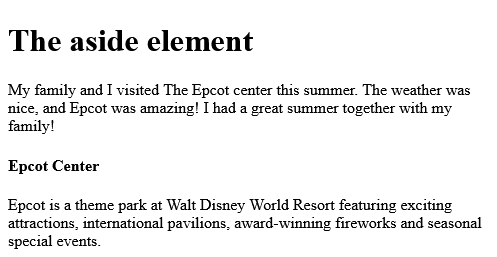
<p>My family and I visited The Epcot center this summer. The weather was nice, and Epcot was amazing! I had a great summer together with my family!</p>

<aside>
  <h4>Epcot Center</h4>
  <p>Epcot is a theme park at Walt Disney World Resort featuring exciting attractions, international pavilions, award-winning fireworks and seasonal special events.</p>
</aside>Output should be:
What types of Browsers will Browser Support for HTML <aside> Tag
The numbers in the table specify the first browser version that fully supports the element.
Output should be:

How to Use CSS to style the <aside> element
index.html
Example:
HTML
<style>
aside {
  width: 30%;
  padding-left: 15px;
  margin-left: 15px;
  float: right;
  font-style: italic;
  background-color: lightgray;
}
</style>Output should be:

How to set Default CSS Settings for HTML <aside> Tag
index.html
Example:
HTML
<style>
aside {
  width: 30%;
  padding-left: 15px;
  margin-left: 15px;
  float: right;
  font-style: italic;
  background-color: lightgray;
}
</style>Output should be:

Category: | Web Tutorial |
Sub Category: | HTML Tag |
Uploaded by: | Admin |
Read Articlehttps://develop.horje.com/learn/1434/reference